Dr.-Ing. Aravindh Krishnamoorthy
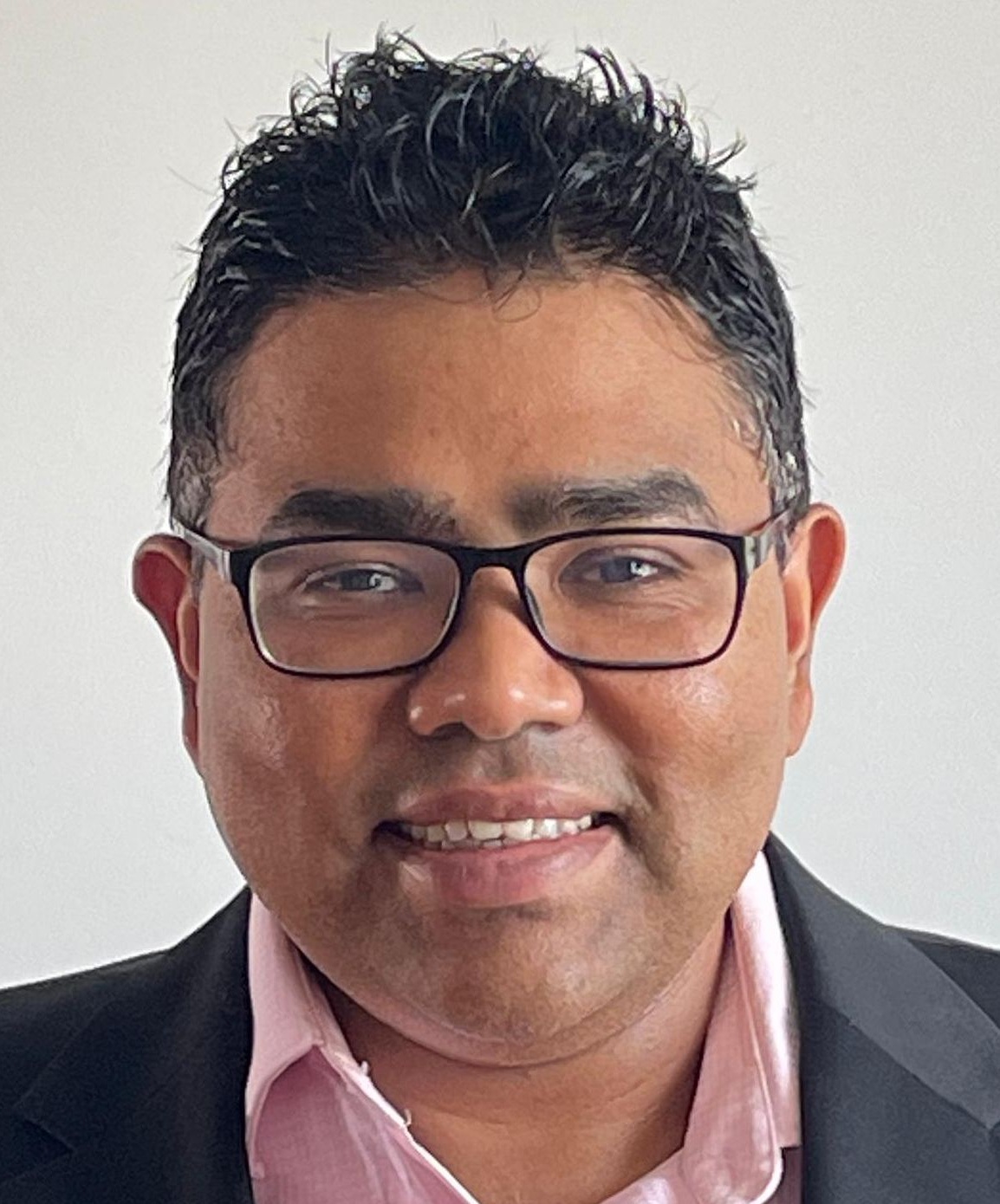
Senior wireless systems and signal-processing engineer with 20+ years of experience across Ericsson, Philips Semiconductors, Fraunhofer IIS, Friedrich-Alexander-University of Erlangen-Nürnberg, and the University of Cambridge. Currently employed as Staff Wireless Communications Engineer at Aalyria. Experience spans wireless 2/4/5G PHY algorithm design, MIMO systems, DSP implementation, numerical linear algebra, embedded optimisation, optical wireless systems, quantum communication interface design, and 3GPP/IEEE standardisation. Track record includes standards contributions, deployed DSP-oriented designs, prototype systems, granted patents, recent patent filings, open-source numerical software contributions, and collaboration across research, product, and industry ecosystems.
Core Expertise
- Wireless PHY algorithm design; 5G/6G systems and standardisation; 3GPP RAN1; IEEE 802.11; MIMO and massive MIMO; DSP and embedded implementation; fixed- and floating-point numerical methods; linear algebra and optimisation; optical wireless communication; scientific computing; Julia, Python, MATLAB, Mathematica, and C/C++.
- Research on system and algorithm design for radio frequency and optical systems, linear algebra, and information and communication theories.
Selected Career Highlights
- Contributed to 2G, 4G, 5G, and ongoing 6G standardisation work across Ericsson, Fraunhofer IIS, and the University of Cambridge, including 3GPP RAN1 and IEEE 802.11 activities.
- Designed, dimensioned, and implemented physical-layer and numerical software components for embedded DSP and vector-processor platforms in telecom and consumer electronics products.
- Led system design and demonstration of optical MIMO communication and optical positioning concepts.
- Built technical links between academic research, industry stakeholders, 5GAA, and ETSI ISGs to align research outputs with standards and deployment priorities.
- Generated patents in both industrial and university environments, including research carried out under tight academic resource constraints.
- Contributed to open source and open research, including numerical algorithms and bug fixes to LAPACK, GNU Octave, R, NumPy, Julia, and Mathics3.
Contact: aravindh.krishnamoorthy@alumni.fau.de (will always be reachable on this address)
News
- Mathematics Blog, with a chapter on Errata for my publications
- Current open source profile including pinned projects on GitHub
Quick Links
- Research: ORCID, arXiv preprints, IEEE Xplore Profile
- Aggregated data: Google Scholar, Google Patents, Fraunhofer Publications
- Open-source programming: GitHub, GitLab, MathWorks File Exchange
- Blogging: Mathematics Blog, Casual Blog
Personal Life
- Hobbies: Hiking, biking, rally racing, winter swimming, competitive mathematics
- Meritorious with $> 99.5$ percentile in several national and international competitive exams since childhood
- Numerous awards and scholarships during studies
- Recognized contributions to several open source software
Curriculum Vitae
Professional Experience
Post-Doctoral Research Associate, University of Cambridge
Dec 2024 – Jun 2026. Cambridge, United Kingdom.
- 6G and WLAN standardisation: 3GPP 6G RAN1, IEEE 802.11, Federated Telecoms Hubs
- Standards engagement: Academia, industry, 5GAA, ETSI ISGs, research alignment, standards priorities, industrial relevance
- Wireless research: ELC, waveform design, MIMO, beam management, quantum optical interfaces
- Optical communications and positioning: Optical MIMO, system design, demonstration, novel techniques, two patent filings
- Neuromorphic communications: Optical codecs, spiking neural networks, neuromorphic processors
- Quantum optical interfaces: Concept design, analysis, simulation, system-level modelling, performance evaluation
- Quantum communications: Two novel concepts, proposal development, GBP 800K submission
- Standards membership: ETSI ISG Multiple Access Techniques, ETSI ISG Quantum Technologies
Research Staff, Friedrich-Alexander-University of Erlangen-Nürnberg
Jan 2019 – Jun 2024. Erlangen, Germany.
- MIMO and massive MIMO: Precoding, decoding, multiple access, NOMA, RSMA, linear precoding
- Distributed signal processing: Baseband algorithms, wireless systems, distributed processing
- Optical wireless communications: High-speed link research, prototype development, LiFi, University of Strathclyde, University of Cambridge
- Mathematical methods: Linear algebra, finite-size random matrix theory, numerical optimisation, numerical analysis, communication-system design
- Intellectual property: Two university-research patents, resource-constrained academic environment
Research Staff, Fraunhofer Institute for Integrated Circuits IIS
Jan 2016 – Dec 2020. Erlangen, Germany. 20% part-time since Jan 2019.
- Beyond-5G/6G research: Shared UE-Side Distributed Antenna System (SUDAS), concept enhancement, system evaluation
- 5G standardisation: Standards contributions, technical studies
- 4G/5G prototyping: OpenAirInterface (OAI), algorithm development, emulation, performance evaluation
- Academic supervision: Master’s theses, internships, student mentoring
- University collaboration: Bilkent University, research coordination
- Deputation: Deputed from Friedrich-Alexander University, Jan 2016-Dec 2018
- Employment: 20% part-time since Jan 2019
Design Engineer / Technical Leader, Ericsson and Philips Semiconductors
Jul 2003 – Aug 2014. Bangalore, India; Nuremberg, Germany.
Wireless and communication systems:
- System architecture: Physical-layer estimation, dimensioning, vectorisation, hardware-software partitioning, embedded DSP implementation
- Wireless systems: LTE, GSM, 2G, 4G, 3GPP RAN1, backend design, simulation, standardisation
- Embedded DSP: Numerical analysis, real-time signal processing, fixed-point and floating-point implementation, EVP, TriMedia
- Linear algebra: Matrix libraries, matrix decomposition, matrix inversion, fixed-point and floating-point computation
- Audio systems: TV audio processing, fixed-point decoding, real-time audio streaming, audio-video synchronisation
- Deputations: Research Triangle Park, Eindhoven, San Jose, Southampton
Education
Doctorate in Communications Engineering
2019 – 2024. Friedrich-Alexander University of Erlangen-Nürnberg, Erlangen, Germany.
- Degree: Dr.-Ing.
- Grade: 1.0, highest grade, with distinction.
- Thesis: Orthogonal and Non-orthogonal Precoding and Decoding Schemes for 5G and Beyond Downlink MIMO Communication Systems.
Master’s in Communications and Multimedia Engineering
2012 – 2015. Friedrich-Alexander-University of Erlangen-Nürnberg, Erlangen, Germany.
- Grade: 1.7.
- Thesis: Windowing Schemes for Robust Speech Coding in Packet Loss Scenarios.
Bachelor’s in Electrical and Electronics Engineering
1999 – 2003. Sir M. Visvesvaraya Institute of Technology, Bangalore, India.
- Grade: 80%; first class with distinction.
- Thesis: Clone Remote Control: An Embedded Real-Time Infrared Capture and Replay System.
Selected Publications and Patents
- A. Krishnamoorthy and R. Schober, “Uplink and Downlink MIMO-NOMA With Simultaneous Triangularization,” IEEE Transactions on Wireless Communications, Jun. 2021. Introduced a simultaneous triangularization approach showing full multiplexing gain in overloaded MIMO-NOMA systems.
- A. Krishnamoorthy and R. Schober, “Downlink MIMO-RSMA With Successive Null-Space Precoding,” IEEE Transactions on Wireless Communications, Nov. 2022. Introduced a successive null-space precoding approach for robust performance in underloaded and critically loaded MIMO-RSMA systems.
- A. Krishnamoorthy, Z. Ding, and R. Schober, “Precoder Design and Statistical Power Allocation for MIMO-NOMA via User-Assisted Simultaneous Diagonalization,” IEEE Transactions on Communications, vol. 69, no. 2, pp. 929–945, Feb. 2021. Developed a matrix decomposition enabling exact rate analysis for Gaussian channels.
- A. Krishnamoorthy and R. Schober, “Downlink Massive MU-MIMO With Successively-Regularized Zero Forcing Precoding,” IEEE Wireless Communications Letters, Jan. 2023. Proposed a low-complexity linear precoding scheme for closely spaced users with correlated channels.
- A. Krishnamoorthy, R. Schober, and M. Breiling, “SUDAS, URU and base station,” U.S. Patent No. 12,382,549, 5 Aug. 2025. Outdoor-to-indoor relaying from sub-6 GHz to mmWave.
- A. Krishnamoorthy, R. Bachl, and T. Wagner, “Channel estimation for a subset of resource elements of a resource block,” U.S. Patent No. 9,860,764, 2 Jan. 2018. OFDM channel estimation for low-delay-spread channels.
- A. Krishnamoorthy, “Processing of channel coefficients of a network,” U.S. Patent No. 9,191,240, 17 Nov. 2015. DSP-based mitigation of on-silicon clock leakage.
For a complete list of filed and granted patents as well as publications, see the Google Scholar profile linked above.
Additional Information
- Programming: Julia, Python, Mathematica, MATLAB, C/C++.
- Languages: German (C1), English.